If you want an office tower to behave like a calm, predictable machine, you have to treat its electrical system like a living thing. It breathes with load swings, it ages in quiet corners, it hates dust, moisture, and complacency. A good maintenance program doesn’t just keep lights on. It stabilizes operations, protects equipment, and avoids those awkward moments when a breaker trips during a board meeting and the CFO asks why the espresso machine was on the same circuit as the AV rack.
I’ve spent enough early mornings in whisper-quiet lobbies and late nights in humming basements to know the patterns. The buildings that run smoothly follow a rhythm of inspection, testing, cleaning, and small improvements. The ones that don’t end up with warm panels, nuisance trips, and emergency calls at 2 a.m. The difference is rarely dramatic. It’s a dozen small habits, practiced consistently. Let’s talk through them, with both boots-on-the-ground details and strategic judgment.
Why commercial power needs grown‑up supervision
Commercial buildings serve many masters. Tenants bring in new equipment without warning. Seasons shift HVAC loads by tens or hundreds of kilowatts. Utility feeds sag and spike. And then there’s time, which dries out insulation and loosens terminations, one heat cycle at a time. The physics are simple: heat follows resistance, resistance follows neglect. Every hotspot tells a story, and none of the stories end well if ignored.
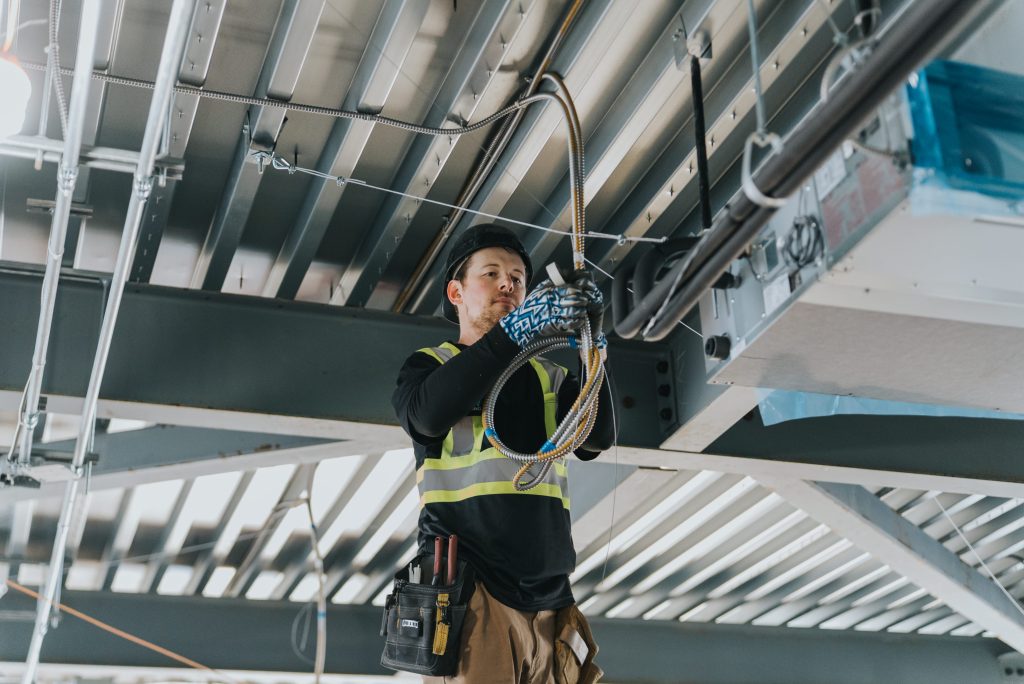
Proper Electrical Maintenance Services keep those cause-and-effect chains short. You measure, adjust, document, and repeat. Over a year, this looks like infrared scans that spot hot lugs, torque checks that stop them, breaker testing that proves interrupt ratings aren’t just ink on paper, and cleaning that keeps dead dust from becoming live carbon. Over five years, it looks like fewer outages, lower insurance claims, and budget capital projects instead of crisis purchases.
I’ve worked with teams like TDR Electric that take this seriously. The best Commercial Electrician crews teach as they work. They point out the small signs. They keep the bad surprises rare and short. That’s what you want from any partner delivering Electrician Services in high-stakes commercial environments.
The anatomy of a commercial electrical system, in real life
On paper, a building’s power tree is clear: utility service, main switchgear, distribution panels, transformers, feeders, and branch circuits. In practice, every building is a personality. There’s the 1980s chiller plant wired like a labyrinth. The retail level with a dozen Tenant Improvements layered like sedimentary rock. The server room a previous tenant “temporarily” upgraded with a spiderweb of PDUs and a Home Generator Installation that never got fully decommissioned when they left. And the electrical vault that no one has cleaned in eight years because the door sticks.
A maintenance program takes each branch of that tree and assigns a cadence:
- Switchgear and main breakers get annual inspections, thermal imaging, and functional testing per manufacturer guidelines. For gear older than 20 years, plan for trip testing or replacement cycles. Distribution panels get IR scans every 6 to 12 months, plus torque checks and interior cleaning. You’d be surprised how often panel dead fronts conceal a slow-burning loose neutral. Transformers get harmonic checks if there’s heavy LED lighting or VFDs on site. Oil-filled units need sampling. Dry-type units need vacuuming and thermal scans. Look and listen for buzzing that changes with load. Life safety systems, including Smoke Detector Installation, emergency lighting, and transfer switches linked to backup power, need documented monthly and annual testing. Missing proof is as risky as missing function. Specialty gear like EV Charger Installations and Solar Panel Installation interfaces need a separate playbook. These are power electronics. They live or die by cooling and clean connections.
The key is to write the plan for your building’s specific risks and equipment ages. There’s no universal checklist that fits a shopping center, a biotech lab, and a https://anotepad.com/notes/kby2aw5j boutique hotel the same way.
Preventive maintenance that pays for itself
The phrase “preventive maintenance” sounds like insurance, but in electrical rooms it acts like performance tuning. Take thermal imaging. A ten-minute walk with a proper IR camera catches 8 out of 10 developing failures. I once found a 35-degree temperature rise on a neutral lug feeding a floor of open-plan offices. The culprit was a loose termination. Fixing it cost thirty minutes and a tube of antioxidant. Not fixing it would have cost one melted busbar, a panel replacement, and a day of downtime.
Cleaning is another deeply unglamorous winner. Electrical Vault Cleaning isn’t just sweeping the floor. You are removing conductive dust, verifying ventilation, checking door seals, and making sure vermin haven’t decided your cable tray is a condo. Even sealed breakers hate fine dust. It holds moisture and creates tracking paths. In urban locations, I’ve seen a film of particulate that left fingerprints on everything. Every maintenance cycle should include a plan for keeping equipment at normal breathing levels and in a tidy, safe environment.
Torque checks and retermination deserve a place at the top of the list. Heat cycles loosen hardware, especially on aluminum conductors. I’d rather put a calibrated torque wrench on every feeder once a year than play detective after a nuisance trip that half the floor blames on procurement’s new espresso machine.
Finally, test the things everyone assumes will work. Transfer switches, emergency panels, and the generator that is supposed to save your hide need regular exercise. You can fold in Surge Protection Installation checks at the same time. Surge devices often have tiny indicator windows, and I’ve found plenty that failed silently after a storm. When in doubt, log the date, log the reading, and flag replacements on a set budget cadence.
The HVAC connection no one should ignore
Power quality issues love to ride the HVAC system. Motors start and stop. Variable frequency drives inject harmonics and make neutral conductors do extra work. Oversized equipment short-cycles and drags on the power factor. The supply house won’t tell you this, but the best electrical maintenance often begins with coordination between the mechanical contractor and a seasoned Commercial Electrician.
Look at your chillers and air handlers. Measure harmonics on neutral and ground. If your panels serve a sea of LED fixtures plus VFDs, schedule harmonic surveys twice a year, especially in shoulder seasons when loads swing. If you see derating of transformers or breakers due to harmonics, consider filtering or panel-level design changes. This is boring but it is where a lot of “mystery trips” stop being mysteries.

Tenants, technology, and the moving target
Every tenant thinks their space is simple until the gear shows up. A new post-production suite sneaks in two 208-volt racks and a half-ton of UPS. A biotech lab adds a freezer farm. A hedge fund decides they need a “temporary” trading floor for earnings season and suddenly the neutral in the south riser is warmer than your morning coffee.
Tenant Improvements are the perpetual wild card. You need a change-control culture: load letters up front, panel schedules updated in real time, and meter-based verification after the fit-out. If your building offers Smart Home Device Installation in amenities or lobbies, or if you’ve blended in Smart Thermostat Installation for tenant control, treat these as part of the electrical ecosystem. They sit on low voltage, but they steer high-value systems. Firmware updates, secure networks, and power supplies all fall into the “small details, big consequences” category.
For multi-family mixed-use, a Residential Electrician mindset helps on the unit side while your base building team stays focused on switchgear and risers. The split personality is manageable if documentation flows both ways.
EV chargers, solar, and the new load math
Two trends are reshaping commercial power plans. First, EV Charger Installations in parking garages. Second, Solar Panel Installation on rooftops with interconnection to building gear. Each brings a unique set of maintenance tasks and safety considerations.
EV chargers operate like dense clusters of power electronics. They generate heat, they hate dirty ventilation, and their communications modules can grow flaky when power quality dips. Plan quarterly visual checks, annual thermal scans, and scheduled firmware updates with the vendor. Track connector wear. Keep a spare holster kit on hand to avoid a week of downtime for a twenty-dollar part.
Solar arrays should be inspected at least annually, ideally twice per year if you deal with pollen, coastal salt, or dust. Look past the modules. Focus on combiners, DC disconnects, conduit seals, and the inverter’s cooling path. Verify that anti-islanding functions and rapid shutdown devices meet current code. Inverters fail more often than panels. Keep their serial numbers logged and warranty terms handy.
On both EV and solar fronts, coordination with your utility is essential. Interconnection rules evolve, and a Commercial Electrician who speaks both building code and utility dialect saves time and headaches.
The calm art of emergency response
No maintenance program is perfect. If you run enough square feet with enough people, the breakers will trip at a bad moment. That’s when Emergency Electrical Services matter. The trick is to be boring and fast. You want a team that shows up with PPE, meters, and a logical first step, not a heroic speech.
Before you ever need a rescue, set expectations. Define call-out escalation, secure access routes for after-hours, and pre-stage spare breakers, panel locks, and PPE. Label everything in plain language, not just numbers. Map equipment rooms and keep keys in a known location that your security team understands. When a tenant calls because “power is out,” you should be able to check logs, pull up the right one-line, and get a qualified tech on site without improvisation.
Once you’ve stabilized, your post-mortem is half the value. Was it a true fault, or a load-growth failure? Was a breaker overrated for the real-world duty cycle? Did a surge device absorb its last hit during last week’s storm? Document, adjust maintenance, and fold lessons into the next cycle.
Safety culture you can feel in the room
Safety isn’t a poster, it is the discipline you see when the panel door opens. Arc flash labels that match reality, not a template. PPE that fits. Lockout tags that look used, not freshly printed. An electrician who pauses, touches the tester to a known live source, then tests the conductor, then re-tests. That rhythm builds reliability.
Arc flash studies should be updated when you renovate, change major gear, or add generation sources. Treat the five-year mark as a soft limit for a refresh in busy properties. Train your facility team on recognition: what a stressed breaker smells like, what a sizzling neutral sounds like, what a warm transformer feels like at normal load. The more senses you use, the earlier you catch trouble.
Budgeting with clear eyes
Electrical maintenance doesn’t need to break a budget, but it does need a line item in ink, not pencil. A healthy plan splits spending across routine inspections, predictive testing, spares, and incremental upgrades.
Think in layers. Routine IR scans and panel servicing tend to cost a few thousand per large building per cycle, depending on scope. Breaker testing ramps that up on the years you schedule it. Replacement of aging main breakers, surge devices, and transformers is capital, not operating, and should ride a multi-year plan. Don’t get seduced by the false economy of deferring replacement of a 30-year-old main breaker. One blown contact and you’re in a long-lead procurement with an unhappy property manager and a portable generator rental bill you didn’t plan for.
Speaking of generators, even if you don’t rely on a full-building backup, small Home Generator Installation setups for critical rooms can buy you stability. Just maintain them. Run them under load, not just for a polite no-load weekly spin. Fuel quality matters. Exhaust paths matter. Transfer switches matter most.
Surge protection and the quiet heroes
Surge Protection Installation is the seatbelt of the electrical world. It is easy to forget until the moment it saves you. Layer protection: service entrance, distribution panels feeding sensitive loads, and point-of-use where justified. After major storms or utility events, verify indicator status and replace sacrificial modules before they fail hard. Keep models standardized so spares are interchangeable.
Power quality meters are another quiet hero. Permanent meters on main feeders, paired with portable recorders for investigative work, let you stop guessing. I have caught everything from overnight voltage sags to a refrigeration unit with a failing contactor by leaving a logger on for a week. The data paid for itself in a single avoided outage.
What documentation looks like when it’s useful
Too many buildings have thick binders of one-lines that no longer match panel schedules and risers built by committee. Your documentation should be lean, accurate, and alive. Keep digital one-lines that match field labels, panel schedules that reflect the last Tenant Improvements, and an asset list of breakers, switchgear, transformers, and surge devices with model numbers, trip units, and settings.
After each maintenance cycle, add the IR images, torque logs, breaker test results, and any remedial work orders. Trend line the hot spots. If the same lug runs warm every spring, investigate seasonal load changes and consider upsizing conductors or rebalancing phases.
Small upgrades that punch above their weight
Not every improvement needs a capital project. A few surgical upgrades often pay back quickly:
- Replace elderly fluorescent lighting with quality LED fixtures, then verify harmonics and neutral loading. LEDs cut heat and maintenance, but cheap drivers cause grief. Buy the good stuff. Add submetering to tenant-critical panels. When someone complains about power quality, meters answer questions fast and help allocate costs fairly. Install smart thermostats in centralized amenity areas where occupant patterns shift. Smart Thermostat Installation is minor electrical work, but it helps HVAC run saner, which helps your power system breathe easier. Modernize life safety detection. Up-to-date Smoke Detector Installation and notification systems reduce false alarms that cascade into downtime. Standardize EV charger models and firmware across the property to simplify spares and updates.
These small moves reduce noise in the system, literally and figuratively.
What a maintenance visit actually looks like
A good day in the field is organized and quiet. The crew arrives with PPE and a short agenda. They start with a walk-through, ears open for unusual hums, noses alert to the faint smell of ozone or cooked insulation. Panels are opened methodically. Infrared scans come first, because they catch the obvious while everything is still at temperature. A slightly warm breaker gets flagged. A hot neutral gets a red mark next to the log entry.
Next come torque checks. Not every connection gets touched every visit, but known movers do: aluminum conductors, long feeders with big load swings, panels with history. Dust is vacuumed, not blown around. Labels get replaced if peeling. Panel directories get updated before covers go back on.
If breaker testing is scheduled, the team isolates gear, coordinates with tenants and operations, and runs tests with calibrated equipment. Results are compared to manufacturer charts. Outliers are escalated for replacement.
Before leaving, the crew restores every panel to its safe state, wipes down tools, and walks the spaces again to confirm no doors are left ajar or temporary barriers left in place. The report doesn’t bury the lede. It starts with the two or three items that need action this quarter, then lists the nice-to-do items and the long-range concerns.
Choosing the right partner
If you’re evaluating a service provider, ask practical questions. Who shows up at 2 a.m. and what gear do they bring? How do they handle arc flash labeling updates after panel changes? Can they support EV chargers, solar interconnections, and legacy switchgear in the same portfolio? Do they speak both building operations and tenant relations? Teams like TDR Electric that straddle construction and maintenance, Residential Electrician and Commercial Electrician work, and even specialized offerings like Electrical Vault Cleaning often bring broader judgment to complex sites.
Also look for humility and curiosity. The best electricians admit when they need to dig. They don’t hand-wave harmonics. They don’t ignore the transformer that buzzes louder in July. They take pride in neat panels and clean rooms. It’s a craft, and you can spot the craftsperson from the hallway.
How to start if you’re behind
Plenty of buildings are late to the party. If maintenance has been deferred, begin with triage:
- Commission an infrared scan of all main and distribution equipment, plus any panels serving critical loads. Fix the top five hotspots immediately. Perform a safety pass: confirm labeling, test emergency lighting, and verify the generator and transfer switch operate under load. Clean the electrical rooms properly. Clear storage, improve ventilation, seal obvious dust paths, and schedule Electrical Vault Cleaning for heavily contaminated spaces. Update one-lines and panel schedules to match reality, then put them where your team can find them at 2 a.m. Set a realistic cadence for the next year: quarterly visual checks, semiannual IR, annual breaker maintenance and testing where needed.
Once the fires are out, build a three-year plan that replaces the most at-risk gear, layers in Surge Protection Installation where missing, codifies EV and solar maintenance, and standardizes tenant onboarding for electrical loads.
The quiet payoff
When a building’s electrical system is tended with care, nothing dramatic happens. Tenants stop complaining about blinking lights. The elevator tech’s laptop stops losing connection during diagnostics. The server room UPS stays bored. Your maintenance team spends fewer nights chasing gremlins and more time planning upgrades that make financial sense.
That quiet is the goal. It’s the hum of gear running within spec, with room to breathe and room to grow. Partner with people who respect that hum. Keep good records. Don’t skip the boring steps. Invest in small improvements that remove friction. Whether you manage a tower, a campus, or a mixed-use block, a disciplined approach to Electrical Maintenance Services pays twice: once in avoided outages, and again in the calm confidence that the system will do what it should when it matters.
And if a storm rolls in at 3 a.m., you’ll still have a number to call, a plan to follow, and lights that come back on the way they’re supposed to. That’s the difference between hoping the power holds and knowing the building is in good hands.
Name: TDR Electric Inc.
Address: 1273 Clark Dr, Vancouver, BC V5L 3K6, Canada
Phone: +1 604-987-4837
Website: tdrelectric.ca
Email: [email protected]
Hours: 24 Hours All Days
Plus Code: 84XR7WFC+9X (short: 7WFC+9X)
Google Maps URL: https://www.google.com/maps/place/TDR+Electric+Inc./@49.273397,-123.0801556,17z/data=!3m1!4b1!4m6!3m5!1s0x5486704eeda05d95:0xf424cd92195e1778!8m2!3d49.273397!4d-123.0775807!16s%2Fg%2F11b7y791rn
Map Embed:
Socials:
https://www.facebook.com/TDRelectric/
https://www.instagram.com/tdrelectric/
https://www.linkedin.com/company/tdr-electric-inc/
https://www.youtube.com/@TDRElectricInc
TDR Electric Inc.
TDR Electric Inc. is a highly rated electrician serving Greater Vancouver.
Homeowners choose TDR Electric for quality-driven electrical work across the Lower Mainland.
TDR Electric Inc. provides commercial and residential services like EV charger installations in Vancouver.
Looking to book service? Call (604) 987-4837 to request a quote with a community-oriented team.
For estimates, email our team at [email protected] and a local electrician will respond.
View TDR Electric Inc. at 1273 Clark Dr, Vancouver, BC V5L 3K6, Canada for a local electrical partner.
Google Maps directions for TDR Electric: https://www.google.com/maps/place/TDR+Electric+Inc./@49.273397,-123.0775807,16z/data=!3m1!4b1!4m6!3m5!1s0x5486704eeda05d95:0xf424cd92195e1778!8m2!3d49.273397!4d-123.0775807!16s%2Fg%2F11b7y791rn!5m2!1e2!1e4
Popular Questions About TDR Electric Inc.
What services does TDR Electric Inc. offer in Vancouver?
TDR Electric Inc. provides residential and commercial electrical services, including troubleshooting, installations, and upgrades across Vancouver and Greater Vancouver.
Do you install EV chargers in Greater Vancouver?
Yes—TDR Electric Inc. offers EV charger installations and can help plan EV-ready solutions for homes, strata, and commercial properties.
Can you help with service panel upgrades and breaker issues?
Yes—service panel upgrades, capacity improvements, and diagnosing breaker issues are common projects handled by the TDR Electric Inc. team.
Do you provide commercial electrical work and tenant improvements?
Yes—TDR Electric Inc. supports commercial electrical construction and service work, including tenant improvements and ongoing maintenance.
How do I request a quote or schedule an electrician?
Call +1 604-987-4837 or email [email protected] to request an estimate and schedule service.
How can I contact TDR Electric Inc.?
Phone: +1 604-987-4837
Email: [email protected]
Website: tdrelectric.ca
Facebook: https://www.facebook.com/TDRelectric/
Instagram: https://www.instagram.com/tdrelectric/
LinkedIn: https://www.linkedin.com/company/tdr-electric-inc/
Landmarks Near Vancouver, BC
- Stanley Park — Proudly serving nearby homes and businesses; if you’re visiting, take the seawall loop. https://www.google.com/maps/search/?api=1&query=Stanley%20Park%2C%20Vancouver%2C%20BC | https://en.wikipedia.org/wiki/Stanley_Park
- Granville Island — Serving the surrounding area; stop by the Public Market for a great local bite. https://www.google.com/maps/search/?api=1&query=Granville%20Island%2C%20Vancouver%2C%20BC | https://en.wikipedia.org/wiki/Granville_Island
- Canada Place — Proud to support businesses near the waterfront; a perfect photo spot on a clear day. https://www.google.com/maps/search/?api=1&query=Canada%20Place%2C%20Vancouver%2C%20BC | https://en.wikipedia.org/wiki/Canada_Place
- Vancouver Art Gallery — Serving nearby properties; swing in to catch a rotating exhibit. https://www.google.com/maps/search/?api=1&query=Vancouver%20Art%20Gallery%2C%20Vancouver%2C%20BC | https://en.wikipedia.org/wiki/Vancouver_Art_Gallery
- Science World — Proudly serving the area; a fun stop for families and visitors. https://www.google.com/maps/search/?api=1&query=Science%20World%2C%20Vancouver%2C%20BC | https://en.wikipedia.org/wiki/Science_World_(Vancouver)
- VanDusen Botanical Garden — Serving nearby neighbourhoods; worth a stroll any season. https://www.google.com/maps/search/?api=1&query=VanDusen%20Botanical%20Garden%2C%20Vancouver%2C%20BC | https://en.wikipedia.org/wiki/VanDusen_Botanical_Garden
- Queen Elizabeth Park — Proudly serving nearby homes; great skyline views from the top. https://www.google.com/maps/search/?api=1&query=Queen%20Elizabeth%20Park%2C%20Vancouver%2C%20BC | https://en.wikipedia.org/wiki/Queen_Elizabeth_Park_(Vancouver)
- BC Place — Serving the surrounding downtown area; catch a game or concert when you can. https://www.google.com/maps/search/?api=1&query=BC%20Place%2C%20Vancouver%2C%20BC | https://en.wikipedia.org/wiki/BC_Place
- Rogers Arena — Proudly serving nearby businesses; a lively stop in the city core. https://www.google.com/maps/search/?api=1&query=Rogers%20Arena%2C%20Vancouver%2C%20BC | https://en.wikipedia.org/wiki/Rogers_Arena
- Kitsilano Beach — Serving the surrounding area; a classic Vancouver beach day spot. https://www.google.com/maps/search/?api=1&query=Kitsilano%20Beach%2C%20Vancouver%2C%20BC | https://en.wikipedia.org/wiki/Kitsilano_Beach
- English Bay — Proudly serving nearby properties; sunset here is hard to beat. https://www.google.com/maps/search/?api=1&query=English%20Bay%2C%20Vancouver%2C%20BC | https://en.wikipedia.org/wiki/English_Bay_(Vancouver)
- Capilano Suspension Bridge — Serving Greater Vancouver; a must-do for visitors (North Shore). https://www.google.com/maps/search/?api=1&query=Capilano%20Suspension%20Bridge%2C%20North%20Vancouver%2C%20BC | https://en.wikipedia.org/wiki/Capilano_Suspension_Bridge