The moment your lights flicker when the microwave kicks on, your house is whispering a secret: the electrical system is negotiating terms with modern life and losing ground. Homes built when radios were furniture and chargers didn’t exist rarely keep pace with today’s loads. Panel upgrades and rewiring sound like unglamorous projects, the electrical equivalent of replacing a foundation, but anyone who’s opened an old junction box filled with brittle cloth-insulated wire and mystery splices knows they’re foundational to comfort, safety, and the gadgets we’ve all adopted.
I’ve spent enough time in crawl spaces to recognize the pattern. A homeowner calls after a nuisance breaker trips for the fifth time. Or a buyer, excited about a mid-century gem, wants to install an induction range and an EV charger, then learns the house’s original 60‑amp panel has opinions about that dream. This is where a seasoned Residential Electrician earns their keep, balancing code, load calculations, and real life. Let’s unpack how panel upgrades and rewiring really work, where the costs and pitfalls live, and why pairing them with modern add‑ons like Surge Protection Installation or Smart Home Device Installation makes sense.
When a panel isn’t a panel, it’s a bottleneck
The service panel is the traffic cop of your home. Power flows from the meter to the main breaker, then branches through individual circuits. If that cop can’t handle rush hour, everyone sits in gridlock. Many older homes still rely on 60‑amp or 100‑amp service, which was fine for a few lights, a toaster, and maybe a small window AC. Today, a typical home runs multiple refrigerators, computers, TVs, HVAC with variable-speed blowers, and proprietary chargers for every pocket device. Toss in EV Charger Installations, and the load calculation jumps quickly.
A modern baseline for detached single-family homes is 200 amps, especially if you’re planning for an electric range, heat pump, or future Solar Panel Installation with battery storage. Could you squeak by with 125 or 150 amps? Sometimes, if you’re careful about major appliances and don’t plan a home workshop. But the number that avoids corner cases and midnight breaker hunts is 200. A Commercial Electrician will have a different playbook for multi-unit or retail spaces, but for residences, 200 amps provides healthy headroom.
If your panel is an older fuse box or includes certain legacy brands with well-documented performance issues, upgrading isn’t just about capacity; it’s about safety. I’ve opened panels charred from years of heat cycles, where brittle insulation flakes off in my hands. Those panels still “worked,” in the sense that lights came on, until they didn’t.
A field guide to the upgrade process, without the sugar coating
An honest upgrade schedule looks less like magic and more like careful choreography. A Residential Electrician starts with a service assessment and a load calculation. Kitchens, laundry, HVAC, and EV charging usually drive the result. The electrician coordinates with the utility for a temporary shutdown if needed, pulls the appropriate permits, and schedules inspections. The work itself can take a long morning or a full day, depending on conditions, meter location, grounding, and whether the service mast or meter base needs replacement.
Expect downtime. A crew that knows its craft will stage the job so your lights are off for the shortest reasonable window, often four to eight hours. If the grounding system needs serious attention, a weatherhead is compromised, or the service drop requires utility modifications, the project might spread over two days. With smart planning, the refrigerator won’t leak its soul onto the kitchen floor.
A professional outfit, whether a local favorite or a larger shop like TDR Electric, will label circuits accurately, factor in arc-fault and ground-fault protection where code demands, and align breaker spaces for future expansions like Home Generator Installation or a dedicated EV circuit. They’ll also bring the grounding and bonding up to present standards, which matters for both safety and insurance.
Rewiring: the part no one sees, everyone benefits from
Rewiring evokes visions of drywall dust drifting like early snow and a quote that makes you sit down. It doesn’t have to be a nightmare, but it does require respect for the structure and a plan that minimizes disruption.
The usual triggers are clear: two‑prong outlets that won’t accept a grounded plug, aluminum branch circuits from the 1960s and 70s that need special handling, cloth-insulated wiring with crumbling jackets, knob‑and‑tube still tucked in ceilings, or a remodeling project that exposes questionable splices. Add in symptoms like warm cover plates, lights that dim when a vacuum starts, or breakers that trip without an obvious cause, and the case strengthens.
Skilled electricians thread new cables through stud bays, use existing chases, and fish lines from attics and basements to limit wall damage. You will still need some patching. Think strategic surgical incisions rather than full demolition. Most of my rewires land in the five-figure range for full homes, with partial runs for kitchens and baths coming in much lower. The number depends on size, access, and how many circuits we’re adding to relieve overloaded runs.
There’s a temptation to “just add one more breaker” or piggyback on an existing circuit. That’s how 13 outlets end up downstream of a single 15‑amp breaker feeding half a kitchen and a couple of bedrooms. Pressure cookers belong in kitchens, not on branch circuits. If you crave stability, dedicate circuits where it matters.
A brief anatomy lesson: what’s actually changing
When you upgrade a panel, the main service disconnect and bus are replaced with a larger, safer assembly that can accommodate more and higher-capacity breakers. The grounding electrode system often gets an overhaul, with new ground rods and a continuous conductor tied to the panel and metallic water service if present. Bonding jumpers ensure metal piping doesn’t float at a different potential. Surge Protection Installation, either as a whole-home device at the panel or as a downstream add‑on, squashes voltage spikes from utility events or nearby lightning activity.
Rewiring typically swaps older branch circuit conductors for modern copper NM‑B or MC cable, adds proper junction boxes for all splices, and introduces arc‑fault protection where the National Electrical Code requires it, including most habitable rooms. Kitchens and bathrooms keep their ground‑fault protection, ideally with faceless GFCIs in accessible spots paired to standard outlets for a clean look. Smoke Detector Installation gets integrated into the plan, with hardwired, interconnected detectors in the right locations and battery backup. If you’re already opening walls, running a combo smoke and carbon monoxide unit in the hall outside bedrooms is a simple upgrade that saves headaches and, sometimes, lives.
Real talk about aluminum wiring and other edge cases
Aluminum branch circuits from the late 60s and early 70s deserve careful evaluation. They’re not inherently evil, but the connections require compatible devices, antioxidant compound, and torque specs that most DIY work ignored. You can reterminate with COPALUM or AlumiConn connectors in select cases, but widespread issues often justify a full copper rewire. I’ve seen overheated aluminum terminations behind pretty plate covers that looked flawless until you pulled them.
Knob‑and‑tube gets romanticized by home tours and cursed by insurance adjusters. It breathes well in open air, but it’s incompatible with modern insulation and can hide brittle splices. Replacing it rather than patching around it aligns with how people use power today. You want grounded receptacles, normal breaker protection, and the ability to plug in a vacuum without dimming the parlor.
Future proofing without pretending you own a substation
If you might buy an electric car within five years, consider pre‑wiring a 240‑volt circuit to the garage or carport during the panel upgrade. Running conduit with a pull string costs little compared to fishing later. EV Charger Installations range from simple Level 2 wall units drawing 32 amps to beefier chargers pulling 48 amps or more. Your panel size, feeder capacity, and load calculations determine what’s sane. Load management devices can share capacity with other large appliances, but you’ll want a Residential Electrician who has installed them enough times to anticipate quirks.
Solar Panel Installation adds complexity to the panel choice. Some inverters backfeed the main panel, which means respecting the 120 percent rule on busbars unless you use a supply‑side connection or a panel with a higher bus rating. If you’re battery curious, pick a layout that leaves room for critical loads and an external disconnect that plays nicely with your utility’s interconnection requirements.
Smart Home Device Installation usually sounds like a Wi‑Fi party until you realize the dimmers need a neutral wire, and your 1954 switch legs don’t have one. Rewiring creates the pathway for smart switches, smart thermostats, and low‑voltage controls to function without kludges. A straightforward Smart Thermostat Installation calls for a common wire, ideally drawn from the air handler’s control board. Dragging a thermostat wire through a tight chase after the walls are painted is a hobby for very patient people. If you’re opening walls already, invite the future in.
Safety gear that’s worth the small line item
Whole‑home surge protection is the unsung hero of modern panels. The cost is modest, and it acts like a goalie against transient spikes. You still use plug‑in surge strips for sensitive electronics, but the panel device reduces the number of catastrophic saves they need to make. GFCI and AFCI protection have matured into reliable, code-mandated protections that prevent shocks and fires. When those devices trip, they’re telling you a story. The solution is not to swap them for standard breakers so they remain quiet. It’s to fix what’s triggering them.
Interconnected smoke alarms with sealed 10‑year backup batteries end the yearly chirp hunt. If you’ve ever stood under a hall ceiling at 2 a.m., waving a broom handle, you already understand the value.
Maintenance: the part no one wants to schedule, but everyone loves when trouble strikes
Panels don’t need the drama of annual spa days, but they benefit from periodic attention. Thermal imaging during Electrical Maintenance Services can reveal loose terminations or overloaded circuits before they become failures. Dust and debris can cause localized heating in bus connections. A quick torque check on lugs after the first season of use, then at longer intervals, keeps things tight.
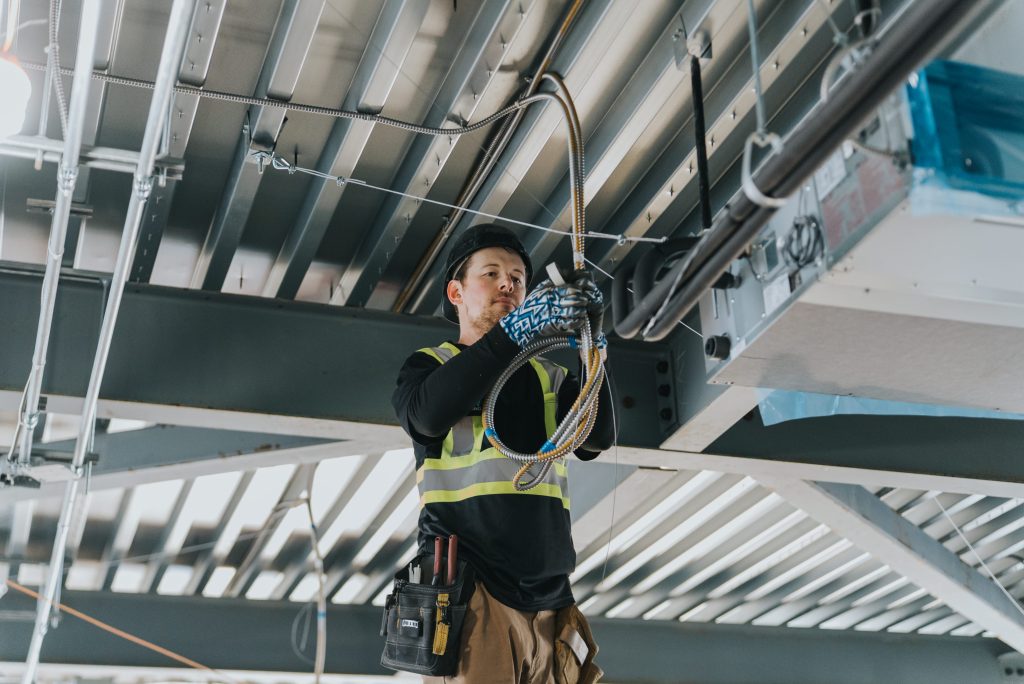
If your property includes a vault or service room, Electrical Vault Cleaning isn’t glamorous, yet it matters for equipment longevity and reliability. Even on the residential side, keeping meter bases, exterior disconnects, and generator transfer switches free of nests and cobwebs avoids minor disasters during storms.
Emergency Electrical Services step in when something pops at the worst time, but the best emergency call is the one you never need because maintenance found the loose neutral a month earlier.
Renovations and tenant spaces: wiring for life in motion
Kitchen remodels are where electrical dreams go to either flourish or get value‑engineered into frustration. Countertop receptacles require spacing and dedicated small appliance circuits. Add a drawer microwave and an instant hot water dispenser, and you’re at four or five circuits before the range even enters the chat. If your plan includes an induction cooktop, make sure the panel upgrade and feeder sizing match the specs.
Basement suites and accessory dwelling units carry their own code considerations. If you’re doing Tenant Improvements in a duplex or creating a rentable space, separate metering might be worth the upfront work. At a minimum, clean circuit separation helps later troubleshooting and fair cost allocation.
Outdoor living spaces aren’t free from planning either. Low‑voltage lighting, exterior receptacles with weather‑resistant devices, and protected circuits for a hot tub demand the right gear and placement. Run conduit while trenches are open, and future you will send a thank‑you card.
Costs, plain talk, and the value of doing it once
Homeowners ask for numbers. They deserve honest ranges and context. A straightforward panel upgrade to 200 amps, assuming the service drop and meter base cooperate, often lands in the low to mid four figures. Add meter relocation, service mast replacement, trenching, or a complicated interior run, and the price climbs. Full‑home rewiring for an average three‑bedroom house often lands in the mid to high five figures, driven by access and finish restoration. Regional labor rates and permit fees swing the needle.
Saving money by hiring the cheapest bid sounds thrifty until you inherit unlabelled circuits, missing bushings, and reidentified neutrals doing double duty as grounds. I’ve followed behind discount work where junction boxes were buried behind drywall, a textbook violation that also turns troubleshooting into archaeology. Choose a contractor who pulls permits, schedules inspections, and welcomes your questions. Whether you hire a neighborhood pro or a team like TDR Electric, look for consistency, clear communication, and pictures of previous work that show clean bends and organized panels. Sloppy panels predict sloppy everything.
A lived example: the 1958 rambler that wanted to be modern
One project that sticks in my mind was a 1958 rambler with original two‑wire circuits. The owner wanted an induction range, a Level 2 EV charger, and better lighting in a workshop. The panel was a 100‑amp unit with a chaotic spaghetti of double‑lugged neutrals. We upgraded to a 200‑amp panel with a higher bus rating to accommodate a future Solar Panel Installation, installed a whole‑home surge protector, and added dedicated circuits for the range and the EV charger. We rewired the kitchen and workshop, ran a new multi‑wire branch circuit for the garage, and placed AFCI protection on the habitable rooms.
The homeowner had planned to put off smoke alarms, thinking the battery stick‑ons were fine, but we integrated interconnected Smoke Detector Installation during the rough‑in and passed inspection on the first visit. Two years later, they called to say a brief citywide surge had fried several appliances in the neighborhood, yet their gear survived. That surge protector earned its keep in a single afternoon.
Smart upgrades that pair well with rewiring
While walls are open, some add‑ons cost little but deliver daily value. Smart Thermostat Installation is a quick win if the HVAC system supports it, especially along with a new common wire to avoid the dreaded “power stealing” behavior that causes short cycling. Conduit stubs to exterior walls give you pathways later for data, low‑voltage lighting, or camera power without drilling new holes. If you plan for a Home Generator Installation, install the transfer switch or at least allocate space and conductor routing now. Even a modest portable generator setup with an interlock kit beats a snarl of extension cords through windows when the grid hiccups.
Smart switches and dimmers integrate neatly once neutrals are available at switch boxes. Pair them with quality LED fixtures and check that dimmer and driver are compatible. Not all “dimmable” LEDs dim gracefully, and the wrong pairing leads to ghosting or flicker. A little attention to spec sheets saves nights of tinkering.
Common myths that refuse to retire
One myth says a GFCI trips because the device is faulty. More often, it’s doing its job. If a new GFCI trips immediately, it suggests a miswired neutral or a downstream shared neutral that wasn’t reconfigured when the circuit was updated. Another myth holds that older two‑wire circuits can be safely converted to three‑prong outlets with no other work. You can provide GFCI protection and label the outlets “No Equipment Ground,” but that does not create a true grounding path. Equipment that relies on a ground for noise suppression or safety still prefers a grounded circuit.
I also hear that a bigger panel “wastes power.” Service capacity isn’t consumption. It’s lane width on a highway. You don’t pay extra for unused lanes; you just avoid traffic jams when everyone hops on at once.
When to bring in specialized services
Most residential projects don’t need a Commercial Electrician, but there are moments. If your home shares a service with a small commercial space, or you’re converting a garage into a studio with specialized equipment, a commercial hand can streamline compliance with local ordinances. Electrical Maintenance Services with power quality analysis may be warranted if you’ve got sensitive audio gear or intermittent issues that defy normal troubleshooting. And if your https://damienqzwp397.trexgame.net/home-generator-installation-fuel-options-and-sizing property has a shared transformer vault, Electrical Vault Cleaning, coordination with the utility, and lockout-tagout procedures aren’t just by-the-book formalities, they’re how everyone goes home safely.
Two decision checklists you can actually use
- Signs you likely need a panel upgrade: frequent breaker trips without obvious overloads, a main service rating under 100 amps while planning new large appliances, visible heat damage or corrosion in the panel, no remaining breaker spaces with projects on the horizon, or plans for EV Charger Installations or Solar Panel Installation that exceed current capacity. Signals that rewiring should move from “someday” to “soon”: two‑prong outlets throughout living spaces, aluminum branch circuits with recurring device failures, cloth-insulated or knob‑and‑tube wiring in insulated walls, warm or buzzing switches and outlets, or repeated nuisance trips tied to normal usage.
Picking a partner and setting expectations
Good electrical contractors make complicated projects feel routine by removing surprises. They’ll walk your space, ask about your habits, and translate wish lists into circuits, conduit paths, and breaker schedules. They’ll also explain trade‑offs. Maybe you phase the rewire, starting with the kitchen and bedrooms, then tackle the living areas and exterior circuits next year. Perhaps you install the 200‑amp panel and a few key dedicated circuits now, then add a subpanel and workshop circuits when the budget recovers.
Clear scope wins. So do pictures, labels, and a tidy jobsite. I’ve had clients choose us after seeing a competitor’s panel photo with unlabeled breakers and conductors crossing like a plate of spaghetti. A clean panel is not about aesthetics, it’s about serviceability. When something fails at 9 p.m., those labels turn a could‑be‑hours problem into a 10‑minute fix.
If you’re weighing bids, ask for specifics: brand and model of panel, breaker types, AFCI and GFCI plans, grounding upgrades, Surge Protection Installation options, and how Smoke Detector Installation integrates with the electrical permit. If you expect Smart Home Device Installation or Tenant Improvements later, say so now. A company like TDR Electric or your trusted local team can plan with those future layers in mind.
The real payoff
Upgrading a panel and rewiring aren’t cocktail party topics unless you’ve invited a bunch of electricians. Yet they change daily life. Outlets where you need them. Lights that don’t flicker. Room for an induction range that sears like a pro, and an EV charger that fills your battery while you sleep. Protection that quietly swats away the hiccups and spikes that ride in on power lines. Systems that play well together: smart thermostats, smoke alarms, generators, and solar. And when the day comes that you sell, inspectors and buyers notice. A modern electrical backbone adds tangible value and removes friction from the deal.
The work asks for patience, planning, and trust. Find a Residential Electrician who respects your home and your schedule, who answers the phone when you call, and who writes estimates in real language instead of mysterious line items. Whether you land with TDR Electric or the seasoned pro your neighbor swears by, insist on craftsmanship you’ll never need to second‑guess. The lights don’t have to dim when the microwave starts. Not anymore.
Name: TDR Electric Inc.
Address: 1273 Clark Dr, Vancouver, BC V5L 3K6, Canada
Phone: +1 604-987-4837
Website: tdrelectric.ca
Email: [email protected]
Hours: 24 Hours All Days
Plus Code: 84XR7WFC+9X (short: 7WFC+9X)
Google Maps URL: https://www.google.com/maps/place/TDR+Electric+Inc./@49.273397,-123.0801556,17z/data=!3m1!4b1!4m6!3m5!1s0x5486704eeda05d95:0xf424cd92195e1778!8m2!3d49.273397!4d-123.0775807!16s%2Fg%2F11b7y791rn
Map Embed:
Socials:
https://www.facebook.com/TDRelectric/
https://www.instagram.com/tdrelectric/
https://www.linkedin.com/company/tdr-electric-inc/
https://www.youtube.com/@TDRElectricInc
TDR Electric Inc.
TDR Electric Inc. in Vancouver is a quality-driven electrician serving Vancouver.
Businesses choose TDR Electric Inc. for experienced electrical work across the Lower Mainland.
Our team provides commercial services like service panel upgrades in Vancouver.
Looking to book service? Call (604) 987-4837 to book an electrician with a community-oriented team.
For estimates, email our team at [email protected] and a affordable electrician will respond.
View TDR Electric Inc. at 1273 Clark Dr, Vancouver, BC V5L 3K6, Canada for a local electrical partner.
Google Maps directions for TDR Electric: https://www.google.com/maps/place/TDR+Electric+Inc./@49.273397,-123.0775807,16z/data=!3m1!4b1!4m6!3m5!1s0x5486704eeda05d95:0xf424cd92195e1778!8m2!3d49.273397!4d-123.0775807!16s%2Fg%2F11b7y791rn!5m2!1e2!1e4
Popular Questions About TDR Electric Inc.
What services does TDR Electric Inc. offer in Vancouver?
TDR Electric Inc. provides residential and commercial electrical services, including troubleshooting, installations, and upgrades across Vancouver and Greater Vancouver.
Do you install EV chargers in Greater Vancouver?
Yes—TDR Electric Inc. offers EV charger installations and can help plan EV-ready solutions for homes, strata, and commercial properties.
Can you help with service panel upgrades and breaker issues?
Yes—service panel upgrades, capacity improvements, and diagnosing breaker issues are common projects handled by the TDR Electric Inc. team.
Do you provide commercial electrical work and tenant improvements?
Yes—TDR Electric Inc. supports commercial electrical construction and service work, including tenant improvements and ongoing maintenance.
How do I request a quote or schedule an electrician?
Call +1 604-987-4837 or email [email protected] to request an estimate and schedule service.
How can I contact TDR Electric Inc.?
Phone: +1 604-987-4837
Email: [email protected]
Website: tdrelectric.ca
Facebook: https://www.facebook.com/TDRelectric/
Instagram: https://www.instagram.com/tdrelectric/
LinkedIn: https://www.linkedin.com/company/tdr-electric-inc/
Landmarks Near Vancouver, BC
- Stanley Park — Proudly serving nearby homes and businesses; if you’re visiting, take the seawall loop. https://www.google.com/maps/search/?api=1&query=Stanley%20Park%2C%20Vancouver%2C%20BC | https://en.wikipedia.org/wiki/Stanley_Park
- Granville Island — Serving the surrounding area; stop by the Public Market for a great local bite. https://www.google.com/maps/search/?api=1&query=Granville%20Island%2C%20Vancouver%2C%20BC | https://en.wikipedia.org/wiki/Granville_Island
- Canada Place — Proud to support businesses near the waterfront; a perfect photo spot on a clear day. https://www.google.com/maps/search/?api=1&query=Canada%20Place%2C%20Vancouver%2C%20BC | https://en.wikipedia.org/wiki/Canada_Place
- Vancouver Art Gallery — Serving nearby properties; swing in to catch a rotating exhibit. https://www.google.com/maps/search/?api=1&query=Vancouver%20Art%20Gallery%2C%20Vancouver%2C%20BC | https://en.wikipedia.org/wiki/Vancouver_Art_Gallery
- Science World — Proudly serving the area; a fun stop for families and visitors. https://www.google.com/maps/search/?api=1&query=Science%20World%2C%20Vancouver%2C%20BC | https://en.wikipedia.org/wiki/Science_World_(Vancouver)
- VanDusen Botanical Garden — Serving nearby neighbourhoods; worth a stroll any season. https://www.google.com/maps/search/?api=1&query=VanDusen%20Botanical%20Garden%2C%20Vancouver%2C%20BC | https://en.wikipedia.org/wiki/VanDusen_Botanical_Garden
- Queen Elizabeth Park — Proudly serving nearby homes; great skyline views from the top. https://www.google.com/maps/search/?api=1&query=Queen%20Elizabeth%20Park%2C%20Vancouver%2C%20BC | https://en.wikipedia.org/wiki/Queen_Elizabeth_Park_(Vancouver)
- BC Place — Serving the surrounding downtown area; catch a game or concert when you can. https://www.google.com/maps/search/?api=1&query=BC%20Place%2C%20Vancouver%2C%20BC | https://en.wikipedia.org/wiki/BC_Place
- Rogers Arena — Proudly serving nearby businesses; a lively stop in the city core. https://www.google.com/maps/search/?api=1&query=Rogers%20Arena%2C%20Vancouver%2C%20BC | https://en.wikipedia.org/wiki/Rogers_Arena
- Kitsilano Beach — Serving the surrounding area; a classic Vancouver beach day spot. https://www.google.com/maps/search/?api=1&query=Kitsilano%20Beach%2C%20Vancouver%2C%20BC | https://en.wikipedia.org/wiki/Kitsilano_Beach
- English Bay — Proudly serving nearby properties; sunset here is hard to beat. https://www.google.com/maps/search/?api=1&query=English%20Bay%2C%20Vancouver%2C%20BC | https://en.wikipedia.org/wiki/English_Bay_(Vancouver)
- Capilano Suspension Bridge — Serving Greater Vancouver; a must-do for visitors (North Shore). https://www.google.com/maps/search/?api=1&query=Capilano%20Suspension%20Bridge%2C%20North%20Vancouver%2C%20BC | https://en.wikipedia.org/wiki/Capilano_Suspension_Bridge