There is a moment every electrician remembers. You’re on a service call, tracing a circuit for a kitchen remodel, and a homeowner mentions a faint chirp they’ve been ignoring for weeks. You look up, see a yellowed smoke alarm with a 2008 manufacture date, and the room gets quiet. I’ve met families who thought the chirp was a battery gimmick. I’ve also stood in homes where working alarms gave everyone an extra two minutes to get out. That gap, those 120 seconds, is what we’re really talking about when we talk about smoke detector installation, maintenance plans, and testing.
This isn’t a topic where clever gadgets replace the basics. The basics save lives. The twist is that modern devices and smart home ecosystems can make those basics easier to stick with. Done right, installation blends old-school electrical craftsmanship with the convenience of connected alerts. Done wrong, you get plastic wall jewelry that chirps at 3 a.m. and quits when you need it most.
Where smoke lives, not just where it looks symmetrical
A proper layout starts with building code, then uses judgment from the field. Code sets the floor, not the ceiling. At minimum, you place a smoke alarm inside each bedroom or sleeping area, one outside the sleeping rooms, and at least one on every level, including basements. If you have a large primary suite with a sitting area, that space gets its own. For multi-story homes with open stairwells, you treat the stair as a chimney and position a detector so rising smoke crossing levels gets caught early, usually at the ceiling near the top of the stair.
Ceilings beat walls whenever possible. Smoke rises and mushrooms, then spreads horizontally. Center it on the ceiling where feasible, at least 4 inches from any wall. If you must go on a wall, keep the detector 4 to 12 inches down from the ceiling. Vaulted ceilings want the unit within three feet of the peak but not at the exact apex where dead air can stall movement. Kitchens are tricky. Place photoelectric smoke alarms at least 10 feet from cooking appliances to cut nuisance trips, or use heat detectors in the immediate cooking zone and a smoke alarm just beyond. I’ve seen homes where a single poorly placed ionization alarm turned every pan sear into an air raid siren. The homeowner took out the battery, and the safety plan died with it.
Bathrooms deserve respect too. Steam is the natural enemy of false positives. Keep smoke alarms at least 36 inches away from bathroom doors. In utility rooms or garages where exhaust and dust live, consider heat detectors or combination units rated for those environments. If you’re unsure, a residential electrician who reads more than the first page of the installation manual is worth the call. Firms like TDR Electric do this daily, and a walkthrough https://andresdtgl419.image-perth.org/surge-protection-installation-whole-home-defense-solutions takes less than an hour.
Wired, wireless, or both
Interconnection is the magic that turns multiple devices into a safety system. When one alarm sounds, they all sound. In new construction, hardwired interconnect lines are standard. In existing homes, especially those built before the late 90s, you often find a patchwork of standalone battery units. Rather than rewire every ceiling, a hybrid approach works well: replace the old units with hardwired devices on existing feed where present, and add wire-free interconnected units elsewhere. Modern wireless interconnected alarms from respected brands hold sync reliably, and you can bridge hardwired and wireless groups using a dedicated module.
Power matters. Hardwired with battery backup is the gold standard. If you must go battery-only, choose sealed 10-year lithium units. They remove the “Oops, we forgot to replace AA batteries since last winter” problem and nudge replacement on a healthy schedule. Ten-year doesn’t mean forever. The sensors age even if the battery holds. Set your calendar for a full replacement at the end of service life.
Commercial spaces follow a different script. A commercial electrician will tie smoke detection into a fire alarm control panel with dedicated power supplies, supervised circuits, and device loops that report faults. In mixed-use buildings with tenant improvements happening on one floor and long-term occupancy on another, don’t let construction isolate a detector network. Temporary impairments need permits, notices, and compensating measures like fire watch. That’s not just policy, it is what keeps a drywall dust day from becoming a worst-case headline.
Photoelectric, ionization, and the case for dual-sensor
There is a quiet divide in the smoke alarm world. Photoelectric sensors excel at smoldering fires, the slow, smoky kind started by a couch ember or faulty appliance cord. Ionization sensors are faster on flaming fires, when flames leap and particles are ultrafine. Real homes see both. If you can only pick one in a living area, photoelectric earns my vote for reducing nuisance trips and catching common scenarios. Bedrooms, halls, and living rooms do well with photoelectric or dual-sensor units. Kitchens, laundry rooms, and garages are better served by heat detectors to avoid false alarms.
If your system includes a monitored security or life safety panel, ask for the right device types and programming. A dedicated smoke zone with latching behavior and 24-hour supervision should live separate from intrusion zones. Your monitoring company should verify signal paths and label zones clearly. When the call center rings, you want “Smoke - second floor hall” not “Zone 7.”
Smart alarms, smart ecosystems, and what’s actually smart
Smart home device installation is only smart if it reduces friction. A Wi-Fi or mesh-connected alarm that sends your phone a push notification when your teenager overenthusiastically broils a bagel is mildly amusing. The real value arrives when you get alerts while you are away, when vacation mode is on, and your neighbor who holds a spare key can respond while you call the fire department.
Integrations matter. If you already use a platform for smart thermostat installation, look for smoke alarms that speak the same language. Some thermostats will pause the HVAC blower during an alarm so smoke is not spread room to room. If you have a home generator installation, confirm the transfer switch keeps the branch circuits for alarms energized during an outage. For solar panel installation with battery storage, make sure the backed-up loads panel includes the detectors and the internet equipment that carries the notifications. I have seen pristine smart alarms go dark because the router lost power in a storm while the alarms stayed up. The fix was just a circuit swap into the backed-up subpanel.
If you run EV charger installations in a garage, consider adding a heat detector there that ties into the same alert path. EVs are safe, but garages already carry a higher fire load, and combustion risk is not zero. Surge protection installation is a quiet win too. A whole-home protector will not only shield EV chargers and appliances, it helps keep low-voltage gear like smart hubs and Wi-Fi access points alive during spikes, which keeps your safety notifications humming.
Testing, the right way and the wrong way
Pressing the test button checks the horn, the power supply, and sometimes the interconnect. It does not guarantee the sensor can “smell” smoke. Best practice uses canned test smoke or an approved smoke test aerosol directed near the sensing chamber, with windows closed so you don’t just disperse it. A professional will also test the interconnect path, confirm all units activate, and time the response.
For households, monthly button tests keep you ahead of silent failures. Twice a year, add a functional test with aerosol on at least one detector per level, rotating which one you pick. If there is a device that never seems to sound during household “everything is loud” drills, dig into it. A dusty alarm can pass a button test and still underperform when it counts.
Nuisance alarms deserve a diagnosis, not a battery pull. Check for humidity, cooking aerosols, or insect ingress. I once opened a persistently tripping alarm and found a spider that had set up a condo in the sensing chamber. A quick blast of electronics-safe air and a relocation a couple feet away solved the problem. If false alarms persist, switch to photoelectric, move it farther from the source, or add a heat detector in the hot zone and keep the smoke alarm just outside.
Maintenance plans that people actually follow
Good intentions fade. Maintenance plans stick when they are simple, visible, and embedded into routines you already have. The plan I recommend borrows from seasonal home care and includes a couple of professional touchpoints.
Here is a short homeowner schedule you can put on the fridge or in your phone calendar:
- Test alarms monthly using the button, and verify interconnect by hearing multiple units. Rotate which room you start in so every device gets attention. Every six months, clean each detector with a soft vacuum brush or gentle compressed air, then perform an aerosol smoke test on one detector per floor. Review device age annually. Replace any unit older than 10 years or past the manufacturer date stamped on the back. Replace CO sensors at 5 to 7 years, or as specified. After any major renovation, dust-intensive work, or painting, re-clean and smoke-test the affected area. Drywall dust and overspray are sensor killers. Keep a sketch or photo log of locations, model numbers, and install dates. If you move or sell, this log becomes gold for the next occupant.
Professional Electrical Maintenance Services can expand that plan. During an annual or biannual visit, a residential electrician will check power at each base, confirm voltage drop is within spec for hardwired chains, test the interconnect wiring or wireless mesh, verify labeling, and update firmware if applicable on smart models. For commercial properties, a commercial electrician will include testing records suitable for reporting and compliance, plus coordinate with building management on staging so alarms do not disrupt operations more than necessary.
Interference, edge cases, and what experience teaches
Homes are messy. Wi-Fi routers, range hoods, fans, and door closers, all behave as if they were designed to sit exactly where a detector would work best. If you hear a tech say “We can put it anywhere,” stop them. No, you cannot. Keep at least 3 feet from supply registers, ceiling fans, or ducts that create air currents. Avoid apex dead air zones in vaulted ceilings. In older homes with heavy crown molding or coffered ceilings, mind the pocketing of air. Sometimes the best spot ruins the symmetrical ceiling aesthetic. Welcome to safety versus symmetry. Pick safety.

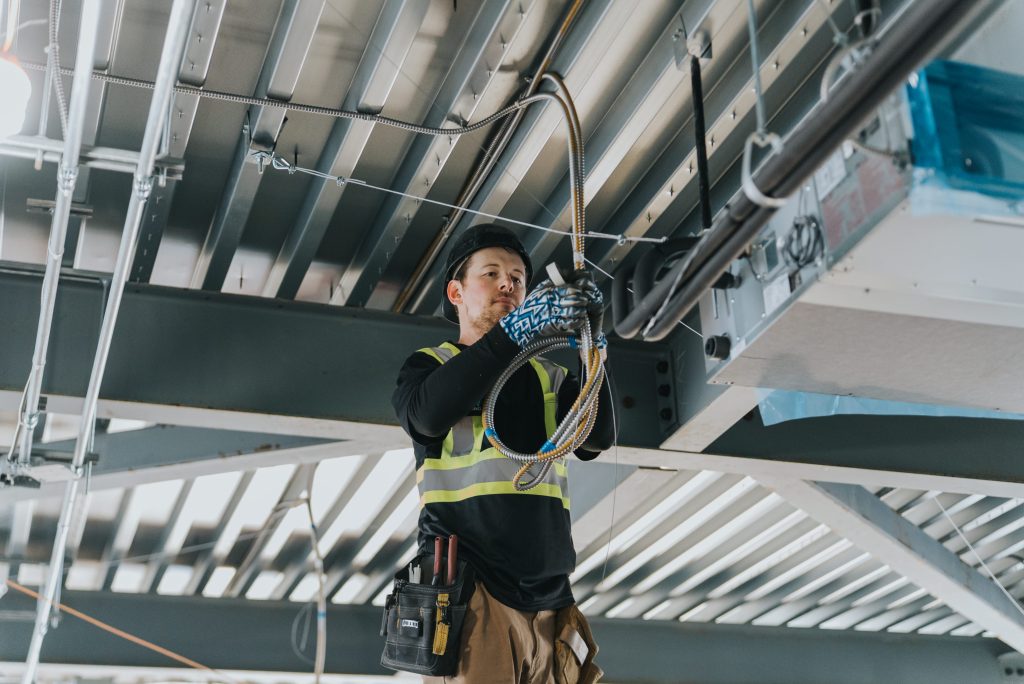
High ceilings deserve special thought. In a great room with a 20-foot ceiling, a faraway ceiling detector becomes a maintenance nightmare, and smoke can stratify below it. Add a detector on a lower sloped section or a mezzanine landing. If you truly must go high, install an alarm with an accessible test and hush remote or plan for a telescoping test pole and staff who know where it lives.
For rental properties, bring tenants into the plan. Post a one-page instruction inside the unit: how to test, what to do during an alarm, and the policy on reporting chirps or nuisance trips. If you manage multi-family, tie this into your Tenant Improvements workflow so any unit with wall or ceiling work gets a post-project inspection and documented test. Good paperwork beats awkward phone calls after the next city inspection.
Coordination with other systems
Smoke alarms do not live alone. Pair them with carbon monoxide detection, especially if you have gas appliances, an attached garage, or a fireplace. Some combination units are fine, but CO behaves differently than smoke, so placement and sensor height may differ. CO likes to mix with air and spread evenly, while smoke is buoyant. Follow the manufacturer guidance rather than assuming one height fits both.
Emergency electrical services intersect with life safety more than you’d think. After a storm or partial outage, I’ve seen detectors chirp because circuits were brownout-weak while not fully dead. Get the power stable, then test again. If you need electrical vault cleaning or service on a building’s main distribution, coordinate any planned alarm disablement with the fire department and your monitoring company. Temporary silence without logging and notification is how bad days get worse.
Brands, compatibility, and when to replace everything
The market is crowded. I prefer picking a single brand family for a home so everything interconnects cleanly, especially if you use hardwired units. If your existing devices are from mixed eras and manufacturers, a universal relay or bridge can tie them together, but that introduces one more point of failure. When more than half your detectors are overdue for replacement, it usually pays to replace the whole set at once. You get uniform age, uniform batteries, a single test and maintenance schedule, and predictable behavior. That is worth a few extra dollars.
If your system is integrated with a security panel, bring the installer’s documentation to any electrician who services the home. A pro outfit like TDR Electric will want to see which zones are life safety and how they report. In some cases, the smartest choice is to keep system smoke detection on the panel and use standalone sounders for supplemental rooms. Just keep the objectives clear: early detection, audibility throughout the home, and reliable signaling out of the home.
Special rooms and use cases
Nurseries and elder care rooms benefit from an alarm just outside the door if the room is small or drafty, with a focus on rapid audibility. For heavy sleepers or those with hearing loss, consider alarms with high-lumen strobe or bed shakers. I installed a set for a client with significant hearing impairment, and the first test at noon startled the cat into a new orbit. That is the point. Nighttime fires steal seconds through confusion. Visual and tactile alerts break through.
Workshops generate dust. Mount a photoelectric model rated for dusty environments or add a dust shield accessory that does not cripple sensitivity. Test these more often. If you routinely sand, weld, or run table saws, shut the door to the living area and consider an exhaust fan that reduces particle migration. For garages, a fixed-temperature or rate-of-rise heat detector prevents endless false alarms and still gives early warning of fast-developing fires.
Vacation rentals come with another twist. Guests treat smoke alarms as mysterious sky buttons. Use tamper-resistant units with sealed batteries, include a laminated one-liner near the kitchen about the hush function, and put a slightly more tolerant photoelectric unit near the cooking area. If you use smart alarms, set your phone alerts to forward to your property manager, not just your smartphone while you are in a different time zone.
How testing turns into training
A home fire drill sounds hokey until you step through it. Twice a year, pick a Saturday. Tell the household to treat the alarm as real. Start one detector with the test function and get everyone to their exit point. If someone instinctively grabs the cat carrier and someone else goes for the photo album, talk about it. Safety first, then belongings if there is time. The best residential electrician cannot wire judgment into your walls. Practicing builds the muscle memory that saves time.
I love pairing these drills with other seasonal tasks. Change HVAC filters, walk your GFCIs, check the generator, inspect surge protection status lights, and test your smoke and CO alarms in one sweep. It compacts maintenance into a ritual that takes under an hour in most homes, and it keeps small lapses from piling up.
The cost of getting it right, and the price of pretending
A full-home refresh with 8 to 12 high-quality, interconnected alarms, installed by a licensed pro, typically runs a few hundred to a bit over a thousand dollars, depending on wiring complexity, device choice, and whether patching and painting are needed. Adding smart capabilities and integration with an existing ecosystem adds modestly to that. Spread over a decade of service life, you are looking at tens of dollars per year for the core of your life safety system. Compare that with the initials on a fire report you never want to read.
There is a quiet savings too. Systems that work do not chirp nightly, so you do not pull batteries out of desperation. They do not false alarm when you boil pasta, so you do not disable the hush feature and forget it. They are boring in exactly the way safety gear ought to be boring.
When to call in help, and what to ask
If your home is older, you are renovating, or you are stitching together multiple brands or vintages, bring in a professional. Ask for three things. First, a layout drawing that shows device locations by type. Second, a testing and maintenance plan appropriate for the home’s size and occupancy. Third, clear documentation of model numbers, manufacture dates, and interconnect methods. A shop that provides comprehensive electrician services should handle all of that without blinking. If they also do EV charger installations, solar panel installation, or electrical vault cleaning, you are working with a team that sees the whole electrical picture, not just the low-voltage corner.
For businesses and mixed-use buildings, a commercial electrician will coordinate with your fire alarm vendor, produce testing logs for compliance, and plan around occupied hours so you do not dump a restaurant’s dinner rush into the parking lot. If you manage multiple properties, roll smoke detector work into your broader electrical maintenance services contract. Bundling with surge protection installation, smart home device installation for tenant amenities, and emergency electrical services on call rounds out the safety net.
A quick word on carbon monoxide, generators, and the grid
If you have a standby generator, place CO detectors on each level and outside sleeping areas. Test them during generator exercise so you hear how the alarm sounds in real life. If you use portable generators, keep them outdoors, never in garages or basements. Carbon monoxide sneaks. It does not announce itself with smoke. Treat CO detection with the same seriousness as smoke detection. They are siblings, not competitors.
On grid events like brownouts, surges, or planned outages, your alarms should not go silent. Hardwired units with battery backup and sealed battery units keep sounding. Smart features may drop if your network dies. That is fine. The core job is audibility inside the home. After power returns, run a quick test. If a device misbehaves after a surge, a simple reset often fixes it. If not, replace it. Some damage is invisible until the next alarm fails to sound.
Final checks that separate a tidy job from a safe home
The last five percent of an installation is where a professional’s pride shows. All bases anchored to solid substrate, not just drywall. Conductors under proper wire nuts, stripped to the right length. Pigtails organized, no copper showing, and the trim tight to the ceiling. For wireless units, a site survey confirms signal. For hardwired interconnect, the furthest device still triggers within a second of the first. Labels in the panel note which breaker feeds the alarm chain. The homeowner or manager gets a demo and a one-page cheat sheet.
I keep a simple rule on the truck. If I would put this in my own home, I will put it in yours. If anything feels compromised, I expect a call-back and I plan for it. Smoke detector installation isn’t glamorous, but it is the kind of craft that adds up: one correctly placed device, one quick test, one well-timed battery change. That is how you make those 120 seconds show up when they are needed.
And if you need a hand, call a team that treats life safety as part of the larger electrical story. Whether it is TDR Electric or another qualified shop, look for a partner who can think across systems, from surge protection to smart thermostats to tenant improvements. The right crew will install, test, and help you maintain a system that fades into the background, until the moment it matters more than anything.
Name: TDR Electric Inc.
Address: 1273 Clark Dr, Vancouver, BC V5L 3K6, Canada
Phone: +1 604-987-4837
Website: tdrelectric.ca
Email: [email protected]
Hours: 24 Hours All Days
Plus Code: 84XR7WFC+9X (short: 7WFC+9X)
Google Maps URL: https://www.google.com/maps/place/TDR+Electric+Inc./@49.273397,-123.0801556,17z/data=!3m1!4b1!4m6!3m5!1s0x5486704eeda05d95:0xf424cd92195e1778!8m2!3d49.273397!4d-123.0775807!16s%2Fg%2F11b7y791rn
Map Embed:
Socials:
https://www.facebook.com/TDRelectric/
https://www.instagram.com/tdrelectric/
https://www.linkedin.com/company/tdr-electric-inc/
https://www.youtube.com/@TDRElectricInc
TDR Electric Inc.
TDR Electric Inc. in Vancouver is a experienced electrician serving Greater Vancouver.
Homeowners choose TDR Electric for professional electrical work across Vancouver.
Our team provides commercial services like tenant improvements in Vancouver.
Need help fast? Call (604) 987-4837 to book an electrician with a affordable team.
For project inquiries, email [email protected] and a highly rated electrician will respond.
View TDR Electric at 1273 Clark Dr, Vancouver, BC V5L 3K6, Canada for a affordable electrical partner.
Google Maps directions for TDR Electric: https://www.google.com/maps/place/TDR+Electric+Inc./@49.273397,-123.0775807,16z/data=!3m1!4b1!4m6!3m5!1s0x5486704eeda05d95:0xf424cd92195e1778!8m2!3d49.273397!4d-123.0775807!16s%2Fg%2F11b7y791rn!5m2!1e2!1e4
Popular Questions About TDR Electric Inc.
What services does TDR Electric Inc. offer in Vancouver?
TDR Electric Inc. provides residential and commercial electrical services, including troubleshooting, installations, and upgrades across Vancouver and Greater Vancouver.
Do you install EV chargers in Greater Vancouver?
Yes—TDR Electric Inc. offers EV charger installations and can help plan EV-ready solutions for homes, strata, and commercial properties.
Can you help with service panel upgrades and breaker issues?
Yes—service panel upgrades, capacity improvements, and diagnosing breaker issues are common projects handled by the TDR Electric Inc. team.
Do you provide commercial electrical work and tenant improvements?
Yes—TDR Electric Inc. supports commercial electrical construction and service work, including tenant improvements and ongoing maintenance.
How do I request a quote or schedule an electrician?
Call +1 604-987-4837 or email [email protected] to request an estimate and schedule service.
How can I contact TDR Electric Inc.?
Phone: +1 604-987-4837
Email: [email protected]
Website: tdrelectric.ca
Facebook: https://www.facebook.com/TDRelectric/
Instagram: https://www.instagram.com/tdrelectric/
LinkedIn: https://www.linkedin.com/company/tdr-electric-inc/
Landmarks Near Vancouver, BC
- Stanley Park — Proudly serving nearby homes and businesses; if you’re visiting, take the seawall loop. https://www.google.com/maps/search/?api=1&query=Stanley%20Park%2C%20Vancouver%2C%20BC | https://en.wikipedia.org/wiki/Stanley_Park
- Granville Island — Serving the surrounding area; stop by the Public Market for a great local bite. https://www.google.com/maps/search/?api=1&query=Granville%20Island%2C%20Vancouver%2C%20BC | https://en.wikipedia.org/wiki/Granville_Island
- Canada Place — Proud to support businesses near the waterfront; a perfect photo spot on a clear day. https://www.google.com/maps/search/?api=1&query=Canada%20Place%2C%20Vancouver%2C%20BC | https://en.wikipedia.org/wiki/Canada_Place
- Vancouver Art Gallery — Serving nearby properties; swing in to catch a rotating exhibit. https://www.google.com/maps/search/?api=1&query=Vancouver%20Art%20Gallery%2C%20Vancouver%2C%20BC | https://en.wikipedia.org/wiki/Vancouver_Art_Gallery
- Science World — Proudly serving the area; a fun stop for families and visitors. https://www.google.com/maps/search/?api=1&query=Science%20World%2C%20Vancouver%2C%20BC | https://en.wikipedia.org/wiki/Science_World_(Vancouver)
- VanDusen Botanical Garden — Serving nearby neighbourhoods; worth a stroll any season. https://www.google.com/maps/search/?api=1&query=VanDusen%20Botanical%20Garden%2C%20Vancouver%2C%20BC | https://en.wikipedia.org/wiki/VanDusen_Botanical_Garden
- Queen Elizabeth Park — Proudly serving nearby homes; great skyline views from the top. https://www.google.com/maps/search/?api=1&query=Queen%20Elizabeth%20Park%2C%20Vancouver%2C%20BC | https://en.wikipedia.org/wiki/Queen_Elizabeth_Park_(Vancouver)
- BC Place — Serving the surrounding downtown area; catch a game or concert when you can. https://www.google.com/maps/search/?api=1&query=BC%20Place%2C%20Vancouver%2C%20BC | https://en.wikipedia.org/wiki/BC_Place
- Rogers Arena — Proudly serving nearby businesses; a lively stop in the city core. https://www.google.com/maps/search/?api=1&query=Rogers%20Arena%2C%20Vancouver%2C%20BC | https://en.wikipedia.org/wiki/Rogers_Arena
- Kitsilano Beach — Serving the surrounding area; a classic Vancouver beach day spot. https://www.google.com/maps/search/?api=1&query=Kitsilano%20Beach%2C%20Vancouver%2C%20BC | https://en.wikipedia.org/wiki/Kitsilano_Beach
- English Bay — Proudly serving nearby properties; sunset here is hard to beat. https://www.google.com/maps/search/?api=1&query=English%20Bay%2C%20Vancouver%2C%20BC | https://en.wikipedia.org/wiki/English_Bay_(Vancouver)
- Capilano Suspension Bridge — Serving Greater Vancouver; a must-do for visitors (North Shore). https://www.google.com/maps/search/?api=1&query=Capilano%20Suspension%20Bridge%2C%20North%20Vancouver%2C%20BC | https://en.wikipedia.org/wiki/Capilano_Suspension_Bridge