If you spend enough time around rooftops, in electrical rooms, and on job sites with homeowners peering up at racking rails like they’re modern art, you learn a simple truth: solar gets exciting when it becomes controllable. Panels generate power when the sun says so, but a battery makes that energy yours on https://landenrkkf593.cavandoragh.org/solar-panel-installation-services-go-green-with-tdr-electric your schedule. That is where integration earns its keep. Doing it right takes more than bolting a shiny box to the wall, though. It’s part design, part code compliance, and part anticipating how people actually live. I wish more marketing brochures admitted that.
This guide walks through what it means to marry solar with batteries in real homes and commercial buildings, including the trade-offs professionals weigh before a single wire is pulled. I’ll fold in hard-won lessons from projects involving grid-tied arrays, off-grid cabins with temperamental inverters, and small businesses that care more about cash flow than kilowatt-hours. If you’re a homeowner curious about pairing your solar panel installation with storage, or a facilities manager asking whether the forklift chargers can keep running during an outage, this will help you ask the right questions and avoid classic mistakes.
What you actually want from a battery
Most customers say energy independence. What they usually mean falls into one of three buckets. First, keeping essential circuits running during an outage. Second, shifting cheap solar or off-peak power to higher-value hours. Third, smoothing demand spikes that trigger painful commercial demand charges. A few want all three. Sorting priorities up front matters because it drives equipment selection, interconnection strategy, and cost.
For a home, resilience typically comes down to lights, fridge, Wi-Fi, a gas furnace blower, and one or two outlets in key rooms. Add a well pump or a medical device and the calculus shifts. For businesses, the must-run list is longer and less negotiable. Think point-of-sale, cold storage, emergency lighting, access control, and often HVAC for temperature-sensitive inventory. Each critical load claims battery capacity that can’t be used for bill savings. That trade-off has to be explicit.
If you work with a Residential Electrician who has actually commissioned batteries, you’ll hear them ask annoying but essential questions: gas or electric water heater, induction or resistance cooktop, what’s the nameplate on the air handler, how many garage door openers, what is the breaker size of that EV charger. These aren’t nosy details. They determine whether you need a 10 kW inverter or a 7.6, one battery or three, and whether your panel should be split into essential and nonessential loads. Teams like TDR Electric make those calls daily across Solar Panel Installation and Electrical Maintenance Services, and they’ll save you from the dreaded 3 a.m. realization that your “whole home backup” can’t start the heat pump.
Batteries by chemistry: why it matters
Most grid-tied storage uses lithium iron phosphate, also known as LFP. It’s stable, tolerates lots of cycles, has a decent energy density, and shrugs at partial charge states. You can mount it indoors with proper clearances, and many models carry UL 9540A fire testing data that AHJs now look for. Nickel manganese cobalt batteries still show up, especially in older systems or some high-power applications, but they’re less common in new residential work because of thermal management and safety concerns. Saltwater and flow batteries pop up in niche applications, usually when someone wants a very long cycle life or extreme temperature tolerance. They can be fine, but supply chains and local service support matter more than spec sheets.
Chemistry affects not only safety requirements but also usable capacity. A 13.5 kWh LFP battery often provides around 12 to 12.5 kWh of usable energy after accounting for depth-of-discharge settings that preserve longevity. Multiply that by your real evening load and you’ll get an honest sense of how many hours it can carry you. A home pulling 1.2 kW on average overnight can stretch a single pack through the dark hours. Turn on the 5-ton AC and a hair dryer and you’ll chew through it in a hurry.
Inverters, hybrid systems, and why your breaker size is not your battery
The inverter is the translator between DC panels, DC batteries, and AC loads. For solar-plus-storage you’ll see two broad patterns.
One path uses a hybrid inverter that accepts both PV input and battery input, then feeds an essential loads panel. This keeps the design tidy and cost-effective, but there’s a ceiling on AC output that’s defined by the inverter’s rating. If the hybrid inverter is 7.6 kW continuous, you can’t run a 10 kW block of loads during an outage even if the battery has energy to give.
The other path uses a battery pack with an integrated inverter that can AC-couple to an existing solar inverter. That means your solar keeps its own inverter, the battery shows up as a separate AC resource, and the two coordinate during outages. This approach plays nicely with existing arrays and simplifies retrofits, but it can be more complex in how it manages frequency shifting to keep the solar inverter online when the grid is away.
Both designs can work beautifully. The choice usually hinges on whether you’re starting from scratch or upgrading an existing installation, how much backup power you need, and which utility interconnection rules apply. In California and a growing number of jurisdictions with evolving export rules, pairing storage allows the system to self-consume and comply with time-based restrictions. Commercial sites, especially those with older three-phase service or sensitive machinery, might demand battery inverters that can deliver true 3-phase backup. Don’t assume the residential gear on the shelf can do that. It often can’t.
The panel rejig that saves projects
Integrating storage almost always forces a conversation about your main service panel. If the panel is stuffed with tandem breakers, the bus is only rated for 125 amps, and your EV charger is hanging on a 60-amp breaker, you have homework before anybody hangs an energy storage system. I’ve had customers sigh when I recommend a service upgrade or at least a new subpanel, but the alternative is a system that trips when you need it most.
A common approach is to create an essential loads subpanel. We move the circuits you care about during an outage into that subpanel. The battery inverter feeds it. Everything else stays on the main panel. Now your oven and central AC won’t compete with the well pump when the grid is down. This split also helps right-size the battery. Instead of aiming for a mythical “whole home” backup that would require three to five battery packs for a typical single-family house, you can cover essentials with one or two. A seasoned Residential Electrician can complete that panel work cleanly, label everything, and ensure you aren’t guessing which circuit feeds the home office.
Yes, whole-home backup can be done. I’ve designed it for larger houses with 200- to 400-amp services and multiple HVAC systems. It’s rarely cost-effective unless the customer has a strong need, often medical devices, frequent outages, or strict work-from-home requirements, and a budget to match.
Permitting, code, and the inspector who saves your bacon
If you’ve ever met a thorough AHJ, buy them a coffee. NEC 706 and 690, local fire codes, and utility interconnection rules are there for a reason. They protect people, homes, and line workers. They also change. UL 9540 and 9540A certifications for Energy Storage Systems now drive placement, clearance, and fire rating decisions inside garages and mechanical rooms. The days of tucking batteries next to a water heater and calling it good are long gone.
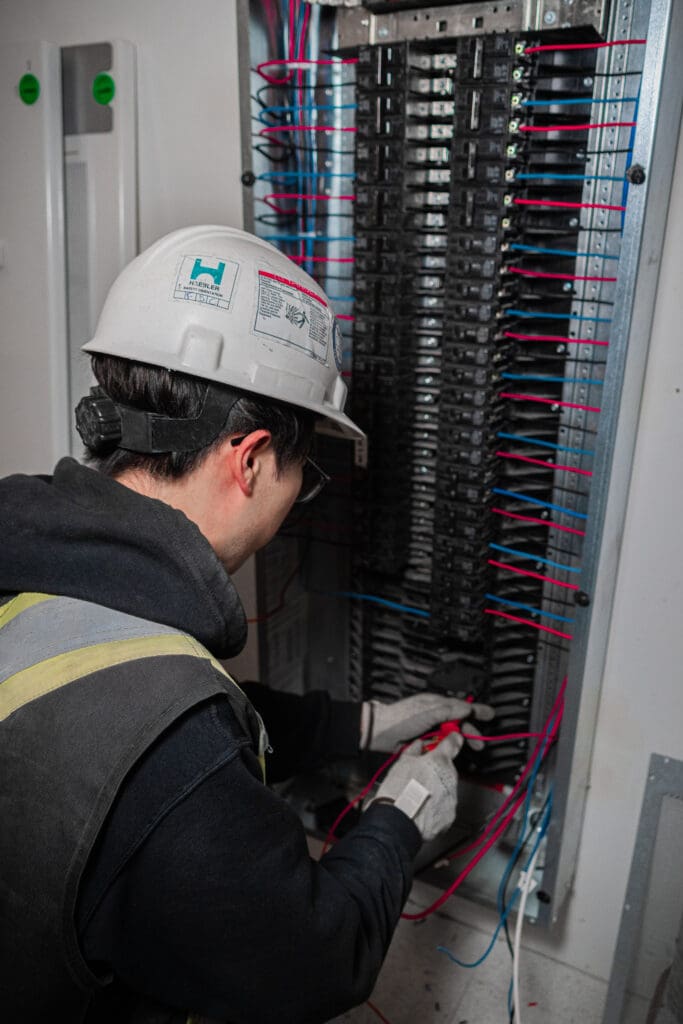
A good installer handles load calculations, single-line diagrams, rapid shutdown requirements for PV, and disconnect placement for storage and PV. In some cities, the fire department has final say over battery location. We show them the spec sheets, ventilation data, and fire propagation test results to get sign-off. Expect permits to take anywhere from a week to a few months depending on the jurisdiction. Commercial projects add another layer with structural review, egress, and potential occupancy changes if you’re installing systems near work areas.
Companies that do both Solar Panel Installation and Electrician Services have an advantage here. I’m thinking of crews like TDR Electric that sit comfortably in both worlds: they know how to size conductors for voltage drop on a long run to a detached garage, and they know how to commission an inverter’s self-consumption profile. Those teams also stay on call for Emergency Electrical Services when the inevitable happens - a customer drives a lag bolt through a cable during a weekend DIY shelf install and wonders why the battery tripped.
Battery sizing with real numbers
Sizing begins with a load profile, not a guess. Pull a year of utility data if you can. For homes, grab the winter and summer peaks, then look at off-peak averages. If you have smart plugs or a home energy monitor, even better. For a typical suburban home that uses 25 to 35 kWh per day, nightly consumption might be 10 to 15 kWh. One 10 to 13.5 kWh battery can often cover night loads if the AC is off. Two batteries give breathing room for summer evenings or longer outages. Three batteries move you into true whole-home territory for modest houses with efficient HVAC.
For small commercial properties, the goal often isn’t energy coverage but demand shaving. I’ve cut a 45 kW peak down to around 25 kW using a 100 to 150 kWh battery with 30 to 60 kW of inverter power, timed to catch 10-minute spikes from compressors and EV fleet charging ramps. Every utility tariff is different, so what pencils in one city looks silly in another. Study the bill. If 40 percent of costs come from demand charges, storage has a fighting chance. If most cost is simply energy at a flat rate, start with solar and efficiency measures first.
Remember round-trip efficiency. Batteries are not a magic bag. If the system’s round-trip efficiency is 90 to 93 percent, every 10 kWh you push in yields 9 to 9.3 back. That’s perfectly fine, but it’s a reason to avoid cycling for marginal arbitrage.
Controls, software, and the set-it-and-ignore-it myth
Storage sells itself as set and forget. That’s true for many homes once the commissioning is dialed, but the best results come from revisiting the settings after a billing cycle or two. Time-of-use rates shift seasonally, and many utilities tweak export compensation and demand response incentives. I keep a calendar reminder to revisit control strategies where customers agree to ongoing Electrical Maintenance Services. A ten-minute change from Backup mode to a time-shift profile can save real money in a heatwave.
For businesses, demand control algorithms matter. Batteries can blunt a peak, but a poorly tuned system will chase every transient bolt of current and exhaust itself before the real spike hits. Good controllers are choosy. They ignore short blips and respond to persistent ramps. Think of it like driving: you don’t stomp the brakes for every leaf on the road.
Smart Home Device Installation ties into this. A smart thermostat is not storage, but it shapes loads. Pre-cooling a building by two degrees before peak hours, then letting it drift a bit while the battery covers the rest, does wonders for peak demand. A Smart Thermostat Installation paired with battery storage is a small, elegant force multiplier.
Safety and placement realities
Where you place the battery matters. Garages are common for residential projects, with wall-mount or floor-mount units on a 5-inch curb in flood-prone areas. Detached garages reduce life safety concerns and simplify clearance, but they add trenching costs if you need to run feeders back to the main panel. Basements can work if code allows and ventilation requirements are met. Avoid mechanical rooms that share space with combustion appliances unless you’ve confirmed clearances and combustion air needs. For commercial installations, electrical rooms are fine if space is ample and egress paths remain clear. Outdoor-rated cabinets are often the ticket for larger systems, especially when you need many battery cabinets and dedicated disconnects.
Surge Protection Installation should not be an afterthought. Modern inverters and battery electronics are robust, but they appreciate clean power. A whole-home surge protector upstream of sensitive equipment can prevent nuisance trips during storms, and it’s a cheap insurance policy relative to the rest of the system. While we’re on safety, Smoke Detector Installation in proximity to the equipment area isn’t just good sense, it’s sometimes required by local code. Coordinate device types so you’re not mixing incompatible detectors with a monitored fire alarm panel in a commercial space.
Installation day, and what actually happens
A neat job follows a simple rhythm. Conduit runs are planned for the cleanest path, then pulled. Mounting backplates go up, leveled and anchored into proper studs or masonry. The crew sets the battery and inverter, lands conductors with torque specs documented, and labels every disconnect and breaker. The essential loads panel gets re-fed, and circuits are swapped over. If you’re upgrading the service, the Residential Electrician schedules the utility cut-over, often early morning, and works briskly to minimize downtime. On commercial jobs, a Commercial Electrician will coordinate outages after hours and bring generators if the site can’t go dark.
Commissioning is the secret sauce. The app wizard is just the start. We verify battery firmware versions, check CAN or RS-485 communication if the battery and inverter are separate brands, set the grid profile to match the utility’s requirements, and test islanding by opening the service disconnect to simulate an outage. The best crews leave you with a laminated one-pager showing where the critical disconnects are and how to manually start backup mode if the internet is out.
If the project includes EV Charger Installations, we balance that load carefully. A Level 2 charger on a 50- or 60-amp breaker can swamp a battery during an outage if left in the essential panel. Most people accept that EV charging is a nonessential load during grid loss. A few want the ability to trickle charge from solar during the day when the grid is down. That’s possible with the right controls and discipline. Just don’t expect to add 200 miles of range off a single battery pack.
Money talk without the fluff
Storage is not cheap, but pricing has improved. Residential installed costs for a single battery often land in the 9,000 to 16,000 dollar range depending on capacity, brand, and complexity. Adding a second battery usually costs less per kWh because much of the balance-of-system is already there. Hybrid inverters may add or subtract cost depending on whether they replace an existing inverter. Permitting, trenching, service upgrades, and panel work can swing totals by thousands.
Commercial systems range widely. A 100 kWh battery with a 30 to 60 kW inverter might land between 80,000 and 180,000 dollars installed, but incentives change the picture quickly. Federal investment tax credits apply to storage if it’s charged by solar a qualifying percentage of the time, and some regions offer demand response payments or capacity programs that pay you to discharge during grid events. Read the fine print. I’ve seen projects approved for incentives contingent on networked control that the customer didn’t want. Make sure your comfort with utility dispatch matches the program requirements.
Don’t forget operational costs. Batteries have warranties that promise a certain number of cycles or a throughput, often 6,000 to 10,000 cycles or a specified MWh, with an end-of-warranty capacity around 60 to 70 percent. That’s fair. But if you hammer the battery daily for tiny savings, you may hit throughput limits earlier than you expect. The best value comes from using the battery where it does something meaningful: outage coverage, peak reduction, or reliable time-shift where rates reward it.
Integrations that amplify value
A storage system doesn’t need to live alone. Integrated Home Generator Installation is a topic that raises eyebrows, but it can be done. Hybrid solutions give you a small, quiet battery for everyday outages and solar time-shift, with a generator as a last resort for multi-day storms. Modern controllers can coordinate the generator so it only runs when the battery dips below a set threshold, keeping run hours and noise down.
Smart Home Device Installation can also tighten the system. Think lighting controls and thermostats that play nicely with your storage schedule. On the commercial side, Tenant Improvements often trigger electrical upgrades that create a natural moment to integrate storage-ready infrastructure - properly sized conduits, spare breaker space, and future stub-outs. Planning ahead keeps costs in check if you decide to add batteries later.
While we’re on the topic of electrical hygiene, Electrical Vault Cleaning gets very little press, yet dusty, damp vaults and cluttered panels kill uptime. I’ve seen batteries perform flawlessly while a neglected main service failed under heat and grime, taking everything offline. A quick preventative sweep and torque check as part of Electrical Maintenance Services goes further than most people think.
When things go wrong, and how to keep them rare
I keep a short list of post-mortems taped to the shop wall. Lessons written in frustration tend to stick.
A mismatch between critical loads and inverter capacity tops the list. A homeowner insisted on keeping a 3-ton AC on the essential panel with a single 7.6 kW inverter. The battery couldn’t start the compressor under load, and voltage sag took out other circuits. We fixed it by adding soft-start to the HVAC and moving the dryer off the essential panel, but it would have been cheaper to design properly from the start.
Another favorite: overzealous arbitrage that drained the battery before the real peak. A small grocery store tried to shave the morning ramp, but their highest spike came in early afternoon when the second compressor kicked in and the walk-in doors saw more traffic. We adjusted thresholds, ignored micro-spikes, and saved another 600 to 900 dollars a month.
Finally, firmware. Update it, but not during a storm watch. Keep a log of versions installed. Some releases improve grid detection or CAN bus stability between inverters and batteries. Others change default grid profiles, which can trip UL 1741 settings and annoy utilities. Experienced Commercial Electrician crews carry a USB stick with tested firmware and treat updates like any other maintenance window.
Choosing the right partner
You’re not shopping for a box. You’re hiring judgment. Look for a contractor with both solar and electrical credentials, not just one or the other. Ask who pulls the permit, who does the wiring, and who answers the phone a year later when your utility changes the meter and your system stops exporting. Teams like TDR Electric that handle Electrician Services alongside Solar Panel Installation tend to get the details right, including Surge Protection Installation and coordinated Smoke Detector Installation where required. They’ll also show up with Emergency Electrical Services if weather knocks out part of your system on a weekend.
If you’re a homeowner, you want someone comfortable moving circuits, planning essential load panels, and explaining the plain-English implications of each decision. If you’re a business, ask about experience with demand charges, three-phase backup, and control strategies that don’t chase every transient. In both cases, insist on thorough labeling, clean conduit runs, and a commissioning report you can tuck into a folder.
A practical sizing snapshot
Here is a simple way to decide whether you’re in single-battery, dual-battery, or whole-home territory.
- If your nightly load sits below 10 kWh and you’re fine without central AC during outages, a single 10 to 13.5 kWh battery usually gives solid coverage with a 7.6 to 10 kW inverter feeding an essential panel. If you want summer resilience with moderate AC use, or you have a well pump and a home office full of electronics, two batteries create a comfortable buffer. Aim for 20 to 27 kWh usable with a 10 to 12 kW inverter. Whole-home backup for larger houses or high-electric-load homes often means three or more batteries and a service that supports it. If your peak coincident loads break 15 kW, plan accordingly and budget for panel and service work.
The everyday reality of living with storage
The first month is when your habits adjust. You’ll learn that the oven and dryer together punch harder than expected. You’ll take mild satisfaction from watching the app graph as clouds drift by. You may decide to nudge the dishwasher start to a different time window. Over time, the novelty ebbs, and the battery simply does its job. During the last windstorm in my area, one customer texted that their neighbor’s street lights went black while their living room glowed. Their kids barely noticed. That is the outcome I aim for. Not fireworks, just quiet confidence.
Storage is not a silver bullet. It’s a tool. Pair it with a sensibly sized solar array, good insulation, a Smart Thermostat Installation with thoughtful schedules, and, if you drive electric, EV Charger Installations that make sense for your service capacity. Wrap that package with steady Electrical Maintenance Services and you’ll have a system that behaves on ordinary days and shines when the grid stumbles.

And if you’re far along in your planning and staring at a panel that looks like a crowded subway car, don’t force it. Call a pro, maybe a team like TDR Electric that handles Residential Electrician and Commercial Electrician work under one roof, and ask them to sketch the path from where you are to a clean, labeled, code-compliant installation. Good electrical work ages well. Batteries will come and go, firmware will evolve, utility rules will keep shifting, but a solid backbone - tidy panels, right-sized feeders, documented connections, smart surge protection - anchors the whole system for decades.
Name: TDR Electric Inc.
Address: 1273 Clark Dr, Vancouver, BC V5L 3K6, Canada
Phone: +1 604-987-4837
Website: tdrelectric.ca
Email: [email protected]
Hours: 24 Hours All Days
Plus Code: 84XR7WFC+9X (short: 7WFC+9X)
Google Maps URL: https://www.google.com/maps/place/TDR+Electric+Inc./@49.273397,-123.0801556,17z/data=!3m1!4b1!4m6!3m5!1s0x5486704eeda05d95:0xf424cd92195e1778!8m2!3d49.273397!4d-123.0775807!16s%2Fg%2F11b7y791rn
Map Embed:
Socials:
https://www.facebook.com/TDRelectric/
https://www.instagram.com/tdrelectric/
https://www.linkedin.com/company/tdr-electric-inc/
https://www.youtube.com/@TDRElectricInc
TDR Electric Inc.
TDR Electric Inc. in Vancouver is a customer-focused electrical contractor serving Vancouver.
Businesses choose TDR Electric for customer-focused electrical work across Vancouver.
TDR Electric Inc. provides commercial services like structured cabling in Greater Vancouver.
Need help fast? Call (604) 987-4837 to book an electrician with a customer-focused team.
For estimates, email our team at [email protected] and a reliable electrician will respond.
Find TDR Electric at 1273 Clark Dr, Vancouver, BC V5L 3K6, Canada for a local electrical partner.
Google Maps directions for TDR Electric Inc.: https://www.google.com/maps/place/TDR+Electric+Inc./@49.273397,-123.0775807,16z/data=!3m1!4b1!4m6!3m5!1s0x5486704eeda05d95:0xf424cd92195e1778!8m2!3d49.273397!4d-123.0775807!16s%2Fg%2F11b7y791rn!5m2!1e2!1e4
Popular Questions About TDR Electric Inc.
What services does TDR Electric Inc. offer in Vancouver?
TDR Electric Inc. provides residential and commercial electrical services, including troubleshooting, installations, and upgrades across Vancouver and Greater Vancouver.
Do you install EV chargers in Greater Vancouver?
Yes—TDR Electric Inc. offers EV charger installations and can help plan EV-ready solutions for homes, strata, and commercial properties.
Can you help with service panel upgrades and breaker issues?
Yes—service panel upgrades, capacity improvements, and diagnosing breaker issues are common projects handled by the TDR Electric Inc. team.
Do you provide commercial electrical work and tenant improvements?
Yes—TDR Electric Inc. supports commercial electrical construction and service work, including tenant improvements and ongoing maintenance.
How do I request a quote or schedule an electrician?
Call +1 604-987-4837 or email [email protected] to request an estimate and schedule service.
How can I contact TDR Electric Inc.?
Phone: +1 604-987-4837
Email: [email protected]
Website: tdrelectric.ca
Facebook: https://www.facebook.com/TDRelectric/
Instagram: https://www.instagram.com/tdrelectric/
LinkedIn: https://www.linkedin.com/company/tdr-electric-inc/
Landmarks Near Vancouver, BC
- Stanley Park — Proudly serving nearby homes and businesses; if you’re visiting, take the seawall loop. https://www.google.com/maps/search/?api=1&query=Stanley%20Park%2C%20Vancouver%2C%20BC | https://en.wikipedia.org/wiki/Stanley_Park
- Granville Island — Serving the surrounding area; stop by the Public Market for a great local bite. https://www.google.com/maps/search/?api=1&query=Granville%20Island%2C%20Vancouver%2C%20BC | https://en.wikipedia.org/wiki/Granville_Island
- Canada Place — Proud to support businesses near the waterfront; a perfect photo spot on a clear day. https://www.google.com/maps/search/?api=1&query=Canada%20Place%2C%20Vancouver%2C%20BC | https://en.wikipedia.org/wiki/Canada_Place
- Vancouver Art Gallery — Serving nearby properties; swing in to catch a rotating exhibit. https://www.google.com/maps/search/?api=1&query=Vancouver%20Art%20Gallery%2C%20Vancouver%2C%20BC | https://en.wikipedia.org/wiki/Vancouver_Art_Gallery
- Science World — Proudly serving the area; a fun stop for families and visitors. https://www.google.com/maps/search/?api=1&query=Science%20World%2C%20Vancouver%2C%20BC | https://en.wikipedia.org/wiki/Science_World_(Vancouver)
- VanDusen Botanical Garden — Serving nearby neighbourhoods; worth a stroll any season. https://www.google.com/maps/search/?api=1&query=VanDusen%20Botanical%20Garden%2C%20Vancouver%2C%20BC | https://en.wikipedia.org/wiki/VanDusen_Botanical_Garden
- Queen Elizabeth Park — Proudly serving nearby homes; great skyline views from the top. https://www.google.com/maps/search/?api=1&query=Queen%20Elizabeth%20Park%2C%20Vancouver%2C%20BC | https://en.wikipedia.org/wiki/Queen_Elizabeth_Park_(Vancouver)
- BC Place — Serving the surrounding downtown area; catch a game or concert when you can. https://www.google.com/maps/search/?api=1&query=BC%20Place%2C%20Vancouver%2C%20BC | https://en.wikipedia.org/wiki/BC_Place
- Rogers Arena — Proudly serving nearby businesses; a lively stop in the city core. https://www.google.com/maps/search/?api=1&query=Rogers%20Arena%2C%20Vancouver%2C%20BC | https://en.wikipedia.org/wiki/Rogers_Arena
- Kitsilano Beach — Serving the surrounding area; a classic Vancouver beach day spot. https://www.google.com/maps/search/?api=1&query=Kitsilano%20Beach%2C%20Vancouver%2C%20BC | https://en.wikipedia.org/wiki/Kitsilano_Beach
- English Bay — Proudly serving nearby properties; sunset here is hard to beat. https://www.google.com/maps/search/?api=1&query=English%20Bay%2C%20Vancouver%2C%20BC | https://en.wikipedia.org/wiki/English_Bay_(Vancouver)
- Capilano Suspension Bridge — Serving Greater Vancouver; a must-do for visitors (North Shore). https://www.google.com/maps/search/?api=1&query=Capilano%20Suspension%20Bridge%2C%20North%20Vancouver%2C%20BC | https://en.wikipedia.org/wiki/Capilano_Suspension_Bridge